Spreading the Hope of Jesus Around the WorldSpreading the Hope of Jesus Around the WorldSpreading the Hope of Jesus Around the WorldSpreading the Hope of Jesus Around the WorldSpreading the Hope of Jesus Around the World
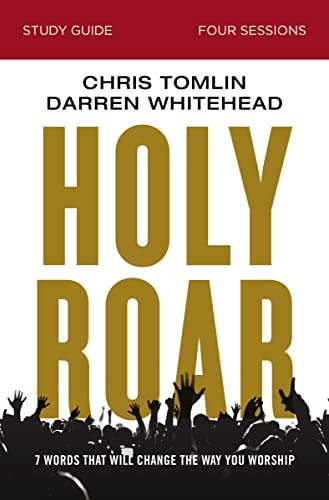
Holy Roar Bible Study Guide: Seven Words That Will Change the Way You Worship
Holy Roar Bible Study Guide: Seven Words That Will Change the Way You Worship
From the Publisher Holy Roar Study Guide (Paperback) Holy Roar Study Guide with DVD Holy Roar Video Study Holy Roar Study Guide (Kindle) Holy Roar (Book) Add to Cart Buying Options Add to Cart Buying Options Add to Cart Customer Reviews 4.7 out of 5 stars 143 4.6 out of 5 stars 20 4.6 out of 5 stars 7 4.7 out of 5 stars 143 4.8 out of 5 stars 975 Price $6.10$6.10 — no data $15.02$15.02 $6.99$6.99 $7.88$7.88 Discover the power of biblical worship In the ancient world, something extraordinary happened when God’s people gathered to worship him. What was it? It was more than just singing; it was time to fully embody praise to God for who he is and what he had done. In the Book of Psalms, there are seven Hebrew words that are translated into the English word “praise,” each of which represents a different aspect of what it means to truly praise God. In this four-session video based Bible study (DVD/digital downloads sold separately), pastor Darren Whitehead shares insights on how to deepen your practice of praise by uncovering the true meaning behind each of these Hebrew words, and Chris Tomlin shares how those insights take shape. Sessions include: The Shout of Praise The Posture of Praise The Songs of Praise The Expectation of Praise About the Authors With 12 albums, 16 #1 radio singles, a Grammy Award, 21 Dove Awards, and two platinum and five gold albums to his credit, Chris Tomlin is among the most well-known and influential artists in music. His songs include “How Great Is Our God,” “Amazing Grace (My Chains Are Gone),” “Our God,” and most recently, “Good Good Father,” to name a few. It is estimated that each week 20–30 million people sing one of Tomlin’s songs in worship. He also cowrote the bestselling children’s book, Good Good Father. More than anything, Chris loves being a husband to Lauren and a daddy to Ashlyn and Madison. Originally from Australia, Darren Whitehead founded Church of the City in Nashville, Tennessee, in 2013. Each weekend more than 6,000 people worship at one of the five locations across the metro area. Darren holds both master’s and doctorate degrees in ministry, with his dissertation research focusing on millennial engagement in the Western Church. He lives with his wife, Brandy, and their three daughters, Sydney, Scarlett, and Violet, in Nashville, Tennessee. Note from the Authors A few years ago, a woman went on vacation with her family to a well-known theme park. One evening, they all decided to take a break from the heat and long lines and watch a stage version of the infamous movie-turned-musical The Lion King. Like everyone else around them, the family was enamored with the costumes and props, as well as the singing, acting and dancing. Near the end of the musical, when the new Lion King appeared on stage in celebration, the sold-out audience erupted in applause. Everyone stood to their feet, hands raised, dancing and singing along with the cast of characters in celebration of this beautiful story. At that moment, with her arms raised high, the woman heard a faint whisper: ”So you can raise your hands for the Lion King, but you can’t raise your hands for the King of Kings?” As the crowd continued to cheer, the woman sat back down in her seat. You see, she had grown up in a well-meaning church, where the preference during worship was for the people in the pews to hold on to their hymnals instead of raising their hands in celebration. ”Lift your voice, not your hands” was the subtle message the woman had heard and seen modelled by her fellow church-goers. Any sort of praise celebration was meant to be personal and internal. . . anything else was just too distracting to her fellow worshippers. If you have spent your early years influenced by this mentality of praise, it can lead to you feeling uncomfortable with outward displays of emotion and enthusiasm. And, certainly, there are times when you should be silent, listening and reflecting on a message and expressing your praise in a quiet manner. As the apostle Paul instructed his churches, “Everything should be done in a fitting and orderly way” (1 Corinthians 14:40). But when we explore the Bible – and especially the worship practies in the Old Testament – we also find people offering enthusiastic praises of passion to God. This should lead us to conclude there are times when God wants us to outwardly express the celebration we feel in our hearts as we consider his greatness and express our praise to him. As King Solomon wrote, “There is a time for everything . . . a time to weep and a time to laugh, a time to mourn and a time to dance” (Ecclesiastes 3:1,4, emphasis added). In the book of Psalms, there are seven primary Hebrew words translated into English as praise. Each of these words – halal, shabach, yadah, barak, tehillah, zamar, and towdah – have distinct, important, and praise-altering implications. This study is an attempt to share the depth of meaning found in those seven words as we explore them together. We pray this study, and the accompanying book of the same name, become a resource to help you better understand just what it means when the Bible says, “Praise the Lord!” We hope it changes the way you worship and gives you “permission” to join in the practices of the praise. We pray it urges you to join in and become a part of the holy roar of God’s people.
Reviews
There are no reviews yet.
Be the first to review “Holy Roar Bible Study Guide: Seven Words That Will Change the Way You Worship” Cancel reply



Reviews
There are no reviews yet.